Some of the links in this post are affiliate links. This means if you click on the link and purchase the item, I will receive an affiliate commission at no extra cost to you. All opinions remain my own.
We live in a world that constantly presents us with challenges, from the mundane task of choosing the quickest route to work to the complex global issues of climate change and economic instability. For children navigating this intricate landscape, the ability to solve problems is not merely an advantageous skill; it is a fundamental necessity. As educators, parents, and caregivers, we bear the responsibility of equipping them with the tools and mindset required to confront obstacles head-on, analyze situations critically, and devise effective solutions. This article explores the multifaceted aspects of developing problem-solving skills in children, outlining practical strategies and theoretical underpinnings that can guide our efforts.
Before we can effectively teach problem-solving, we must first understand what it entails. We often perceive problem-solving as a singular action, but it is, in fact, a complex cognitive process involving several interconnected stages. It is less about finding a pre-packaged answer and more about constructing a pathway to a solution.
Defining a Problem
The initial step in any problem-solving endeavor is accurately defining the problem. We cannot address an issue if we do not fully comprehend its scope and nature. For children, this means helping them articulate what went wrong or what they want to achieve. For instance, a child exclaiming, “My tower fell down!” needs to be guided to understand why it fell – perhaps the base was too narrow, or the blocks were stacked unevenly.
- Observation and Analysis: We encourage children to observe the situation meticulously. What are the visible symptoms of the problem? What relevant information is available? This is akin to a detective gathering clues at a crime scene.
- Questioning for Clarity: We prompt them with open-ended questions: “What exactly happened?” “When did it start?” “Who was involved?” These questions help them delve deeper than superficial observations.
- Identifying the Core Issue: We guide them to differentiate between symptoms and root causes. A tantrum, for example, might be a symptom of unmet needs or overwhelming emotions, not the problem itself.
Generating Solutions
Once a problem is defined, the next stage involves brainstorming potential solutions. This phase emphasizes creativity and openness, where all ideas, no matter how unconventional, are initially considered valuable. We aim to foster a non-judgmental environment where children feel secure in expressing their thoughts.
- Brainstorming Techniques: We can introduce techniques like “idea showers” where all ideas are written down without immediate critique. For younger children, this might involve drawing pictures of potential solutions.
- Divergent Thinking: We encourage children to think broadly and explore multiple avenues. Instead of seeking the “right” answer immediately, we prompt them to consider a variety of approaches. “What are some different ways we could try to fix this?”
- Drawing on Prior Experiences: We help them connect current problems to past experiences where they successfully overcame similar obstacles. This reinforces their sense of agency and demonstrates that they already possess a repertoire of problem-solving strategies.
Evaluating and Selecting Solutions
After a range of potential solutions has been generated, the critical task of evaluating and selecting the most appropriate one begins. This stage requires logical reasoning and an understanding of consequences.
- Pros and Cons Analysis: We guide children to weigh the advantages and disadvantages of each proposed solution. What are the potential benefits? What are the potential drawbacks or risks?
- Predicting Outcomes: We encourage them to think through the likely consequences of each choice. “If you do X, what do you think will happen?” This helps them develop foresight and an understanding of cause and effect.
- Feasibility and Resources: We help them consider the practicalities of each solution. Is it achievable with the available resources (time, materials, support)?
Implementing and Reflecting
The final stages involve putting the chosen solution into action and then critically reflecting on its effectiveness. This iterative process allows for learning and refinement.
- Taking Action: We empower children to implement their chosen solution, providing support and encouragement without taking over the task. This fosters independence and builds confidence.
- Monitoring and Adjusting: We teach them to observe the results of their actions and be prepared to adjust their approach if the initial solution is not meeting the desired outcome. This is crucial for developing resilience and adaptability.
- Post-Mortem Analysis: After the problem has been addressed, we engage in a reflective discussion. “Did it work? Why or why not? What did you learn? What would you do differently next time?” This consolidates learning and transforms experiences into valuable lessons.
Developing problem-solving skills in kids is essential for their growth and success in various aspects of life. A related article that offers engaging activities to enhance these skills is available at this link: Mini Burgers Recipes for Summer. This article not only provides fun recipes but also encourages children to think creatively and work collaboratively in the kitchen, fostering their ability to tackle challenges and come up with solutions.
Creating a Problem-Solving Culture
The environment in which children develop plays a pivotal role in their problem-solving abilities. We must strive to cultivate a culture that not only tolerates but actively encourages and values problem-solving. This goes beyond structured lessons and permeates the daily interactions and expectations within our homes and classrooms.
Developing problem-solving skills in kids is essential for their growth and independence. Engaging them in activities that challenge their critical thinking can significantly enhance these skills. For parents looking for ways to support their children in this area, it’s beneficial to also focus on self-care strategies. A related article on how to take care of yourself at the end of a long day can provide valuable insights for parents, ensuring they are in the best mindset to nurture their children’s development. You can read more about it here.
Fostering Curiosity and Exploration
Curiosity is the engine of problem-solving. When children are curious, they are more likely to investigate, question, and seek understanding. We cultivate this by providing ample opportunities for exploration and discovery.
- Open-Ended Play: We offer toys and materials that invite imaginative and self-directed play, such as building blocks, art supplies, and sensory bins. These allow children to experiment with different arrangements and outcomes.
- Asking “Why” and “How”: We model a curious mindset by regularly asking “why” and “how” questions ourselves. We also encourage children to vocalize their own curiosities.
- Exposure to Novelty: We introduce new experiences, concepts, and environments to broaden their horizons and stimulate their innate desire to learn and understand.
Encouraging Independence and Autonomy
Children who are given opportunities to make choices and experience the consequences (within safe limits) develop a stronger sense of agency. This autonomy is crucial for building confidence in their problem-solving capabilities.
- Age-Appropriate Choices: We provide children with choices that are developmentally appropriate, from selecting their clothes to deciding on an activity during free play.
- Allowing for “Productive Struggle”: We resist the impulse to immediately intervene or solve problems for them. Instead, we allow them to grapple with challenges, offering guidance and support when truly needed, but not taking over. This allows them to build their own metaphorical muscles.
- Assigning Responsibilities: We give children tasks and responsibilities that require them to plan, execute, and troubleshoot – whether it’s setting the table, packing their backpack, or caring for a pet.
Teaching Resilience and Growth Mindset
Problem-solving is rarely a linear process; it often involves setbacks and frustrations. We equip children with the emotional fortitude to persevere through these difficulties by nurturing resilience and a growth mindset.
- Framing Mistakes as Learning Opportunities: We shift the narrative around mistakes from failures to valuable data points. “What did we learn from that attempt?” is more constructive than “You did it wrong.”
- Emphasizing Effort Over Outcome: We praise the effort and persistence children demonstrate, rather than solely focusing on the successful completion of a task. This encourages them to keep trying, even when faced with difficulty.
- Modeling Perseverance: We openly share our own experiences of encountering challenges and how we worked through them. This vulnerability provides a powerful example for children.
Practical Strategies for Nurturing Problem-Solving Skills
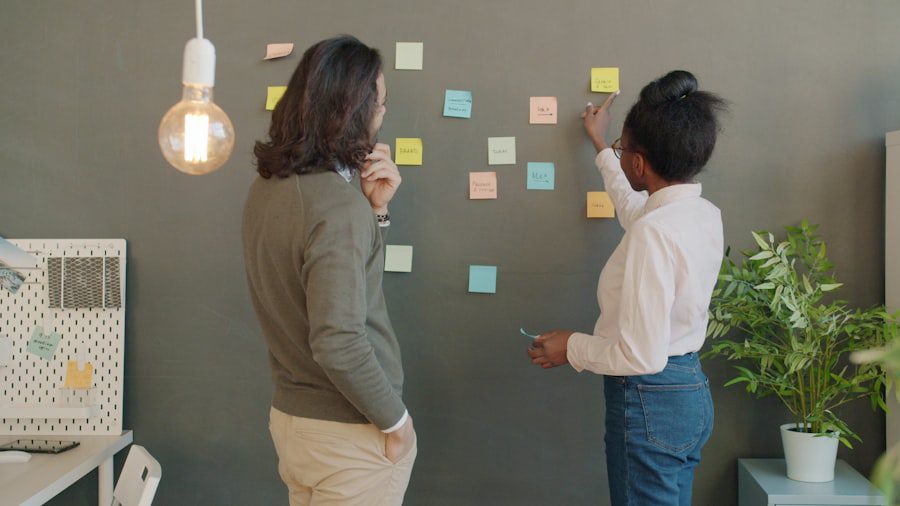
While a supportive culture is foundational, specific, actionable strategies can further enhance children’s problem-solving prowess. We integrate these approaches into daily routines and learning activities.
Engaging in Collaborative Problem-Solving
Many real-world problems require collective effort. We foster collaborative problem-solving skills by creating opportunities for children to work together to overcome challenges.
- Group Projects and Activities: We design activities where children must collaborate to achieve a common goal, such as building a complex structure, solving a puzzle, or staging a play.
- Conflict Resolution Skills: We teach and model effective conflict resolution strategies, guiding children to communicate their needs, listen to others, and negotiate solutions peacefully.
- Role-Playing Scenarios: We use role-playing to help children practice problem-solving in social situations, preparing them for real-life interactions.
Utilizing Play-Based Learning
Play is the primary mode of learning for young children, and it offers an unparalleled environment for developing problem-solving skills organically. We view play not as mere recreation but as critical developmental work.
- Construction Play: Building with blocks, LEGOs, or even natural materials requires children to plan, experiment with weight and balance, and overcome structural challenges. Their constructions are miniature engineering projects.
- Puzzles and Logic Games: These activities directly target spatial reasoning, pattern recognition, and logical deduction – all foundational elements of problem-solving.
- Dramatic Play: When children engage in dramatic play, they encounter and resolve various “problems” within their pretend worlds, such as mediating disputes between characters or finding solutions to imaginary predicaments.
Teaching Metacognitive Skills
Metacognition, or “thinking about thinking,” is crucial for effective problem-solving. We help children become aware of their own thought processes and develop strategies for self-monitoring and self-regulation.
- “Think Aloud” Modeling: We verbalize our own problem-solving processes while working through a task. “Hmm, this isn’t working. I wonder if I should try it this way instead. What are my options here?”
- Prompting Self-Reflection: We regularly ask questions that encourage children to reflect on their thinking: “How did you figure that out?” “What was your plan?” “Were there other ways you could have approached this?”
- Introducing Thinking Tools: We can introduce simple frameworks like a “plan, do, review” cycle or a “what is the problem, what are the options, what will I choose” sequence to help them structure their approach.
Integrating Problem-Solving into Academic Subjects

Problem-solving is not an isolated skill; it is intrinsically linked to all academic disciplines. We consciously integrate problem-solving challenges across the curriculum, making learning more engaging and meaningful.
Mathematics as a Playground for Problems
Mathematics provides a natural arena for developing logical reasoning and problem-solving. We move beyond rote memorization to focus on conceptual understanding and strategic thinking.
- Word Problems: We emphasize understanding the context and identifying the mathematical operations required, rather than simply plugging numbers into formulas. We empower children to unpack these narrative challenges.
- Mathematical Puzzles and Investigations: We present open-ended mathematical challenges that require exploration, pattern recognition, and creative approaches to solutions.
- Real-World Applications: We connect mathematical concepts to real-life situations, demonstrating how math is used to solve practical problems, such as budgeting for a family trip or calculating ingredients for a recipe.
Science as Inquiry and Discovery
Science is fundamentally about asking questions, proposing hypotheses, and testing solutions – the very essence of problem-solving. We frame science education as an investigative journey.
- Hands-On Experiments: We provide opportunities for children to conduct experiments, which involve defining a question, making predictions, designing procedures, analyzing data, and drawing conclusions. Each experiment is a micro-problem to be solved.
- Scientific Inquiry Projects: We guide children through inquiry-based projects where they identify a scientific phenomenon, formulate questions, and design their own investigations to find answers.
- Analyzing Scientific Data: We teach children how to interpret charts, graphs, and observations to identify patterns and draw conclusions, fostering their analytical problem-solving skills.
Literacy as a Tool for Understanding and Resolving
Literacy, too, is fertile ground for problem-solving. Understanding narratives, interpreting characters’ motivations, and even constructing compelling stories all involve elements of problem-solving.
- Character Analysis: We encourage children to analyze the problems faced by characters in stories and how those characters attempt to resolve them. “What was the main character’s problem? How did they try to fix it? Did it work?”
- Predicting Outcomes: We engage children in discussions about what might happen next in a story, prompting them to use logical reasoning and contextual clues to make predictions.
- Creative Writing Challenges: We provide story starters or scenarios that require children to invent problems and then devise creative solutions within their narratives.
In conclusion, developing problem-solving skills in children is an ongoing and multifaceted endeavor. It requires a conscious effort on our part to create a supportive environment, model effective strategies, and provide ample opportunities for practice. By understanding the nature of problem-solving, fostering a culture of curiosity and resilience, implementing practical strategies, and integrating these skills across all academic domains, we can equip the next generation with the cognitive tools they will need to navigate the complexities of their lives. We are not just teaching them to solve problems; we are teaching them to be adaptable, resourceful, and capable individuals, ready to confront any challenge that comes their way.